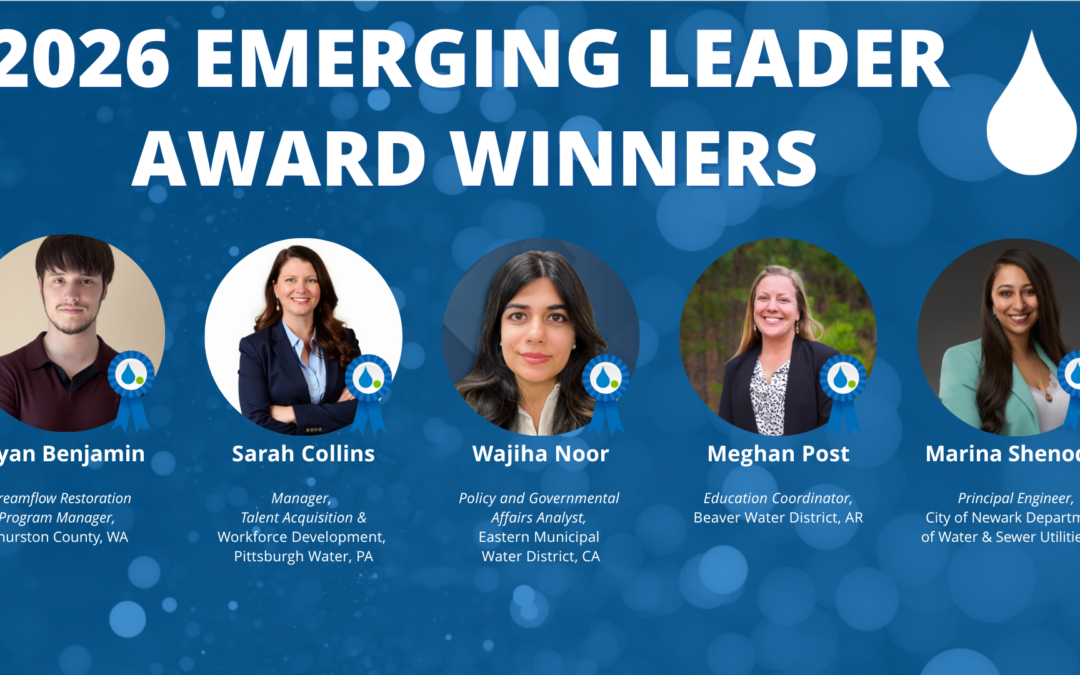
WaterNow is pleased to introduce the recipients of our 2026 Emerging Leader Awards! The award celebrates, lifts up, and supports the work of mid-level utility and municipal professionals from a range of backgrounds in the water sector, poised to take on leadership roles in coming years. The award is presented to Emerging Leaders whose work demonstrates innovation and action towards environmentally-sustainable, community-centered practices at their utilities and agencies.
Our 2026 Emerging Leaders winners come from communities across the United States and from different roles and types of agencies, but each of them has shown that they are dedicated to making the sector a better steward of the natural world and a dynamic partner for the residents and organizations they serve. Each of this year’s winners will receive a $1500 stipend to support their continued professional development, and will be invited to receive their award in person at the Emerging Leader Awards Ceremony, to be held on June 22 alongside AWWA’s Annual Conference and Expo in Washington DC. The winners will also join the Emerging Leader Network as its newest members, gaining access to dedicated networking and educational events, tailored resources, and a community of rising leaders aligned in their efforts to serve their communities and champion environmental and social values in the water sector.
We’re so excited to present to you this year’s winners:
Sarah Collins, SHRM-CP, Manager of Talent Acquisition and Workforce Development
Pittsburgh Water
 Since 2021, Sarah has led efforts to build an equitable, future‑ready workforce in Pittsburgh by expanding access to meaningful careers in the water sector. In her role at Pittsbugh Water, she leads programs for youth and adults seeking career changes, particularly those from disadvantaged communities within the utility's service area. In partnership with schools, affinity groups, and community organizations, these initiatives integrate sustainability education with hands-on experiences with green infrastructure projects, water treatment plant tours, and job shadowing opportunities.
Sarah also led the creation of Pittsburgh Water’s first apprenticeship program for Stationary Engineers and has broadened partnerships with schools, affinity groups, and community organizations to reach individuals who may not have previously seen themselves in water careers. Sarah’s dedication to growing the water workforce is predicated on the idea that when more people can access and thrive in water careers, communities become stronger, utilities become more resilient, and the future of water becomes more equitable for all.
Wajiha Noor, Policy and Governmental Affairs Analyst
Eastern Municipal Water District, California
 Wajiha analyzes and monitors water, wastewater, and recycled water policy and legislation while advocating for the Eastern Municipal Water District at the state and local levels. She was selected for the Award for her role in developing and launching EMWD’s low-income customer data exchange with Southern California Edison, creating a new, data-informed approach to identifying and supporting low-income residents through enrollment in EMWD’s water affordability, conservation, and efficiency programs.
Her leadership extends state-wide as a member of the California State Water Resources Control Board’s Safe and Affordable Funding for Equity and Resilience (SAFER) and Wastewater Needs Assessment Advisory Groups . Wajiha’s work shows that utilities can align affordability, water use efficiency, and customer education with utility priorities to benefit environmental sustainability, community trust, and create benefits for everyone.
Bryan Benjamin, Natural Resources Program Manager
Department of Community Planning & Economic Development, Thurston County, Washington
I n his work at Thurston County, Bryan has developed a progressive streamflow restoration program that centers improving hydrology through strategic land and water acquisitions, implementation of nature-based solutions, and instream habitat recovery. In support of this work, he has secured grant funding to support integrated water resources management planning, development of incentive-based regulatory programs, and acquisition of water rights in the County’s fastest-growing watershed.
Bryan has played a pivotal role in fostering collaboration between the County, local jurisdictions, tribal governments, and state agencies. Bryan’s leadership demonstrates how county governments can leverage innovative financing mechanisms and regional collaboration to support ecosystem recovery through community-driven initiatives.
Marina Shenoda, Principal Engineer
City of Newark Department of Water and Sewer Utilities, New Jersey
 Marina Shenoda is advancing sustainable stormwater management and community-centered infrastructure through her leadership in the City of Newark’s Green Infrastructure Program. As a Principal Engineer, she oversees complex projects that combine green infrastructure with meaningful community engagement. Marina manages major initiatives, including the $3.4 million Peddie Ditch CSO facility and multiple green infrastructure sites across Newark’s five wards, helping reduce stormwater runoff, mitigate combined sewer overflows, and create neighborhood green spaces that enhance quality of life.
Marina’s work also embeds workforce development into infrastructure implementation and management by building partnerships with the Newark Workforce Development Board, Rutgers University, and the South Ward Environmental Alliance to create pathways for underrepresented communities to enter green infrastructure careers. Additionally, she founded the Women in Water Committee for NJ AWWA, launching programming that expands networking and professional development opportunities for women in the water sector.
Meghan Post, Education Coordinator
Beaver Water District, Arkansas
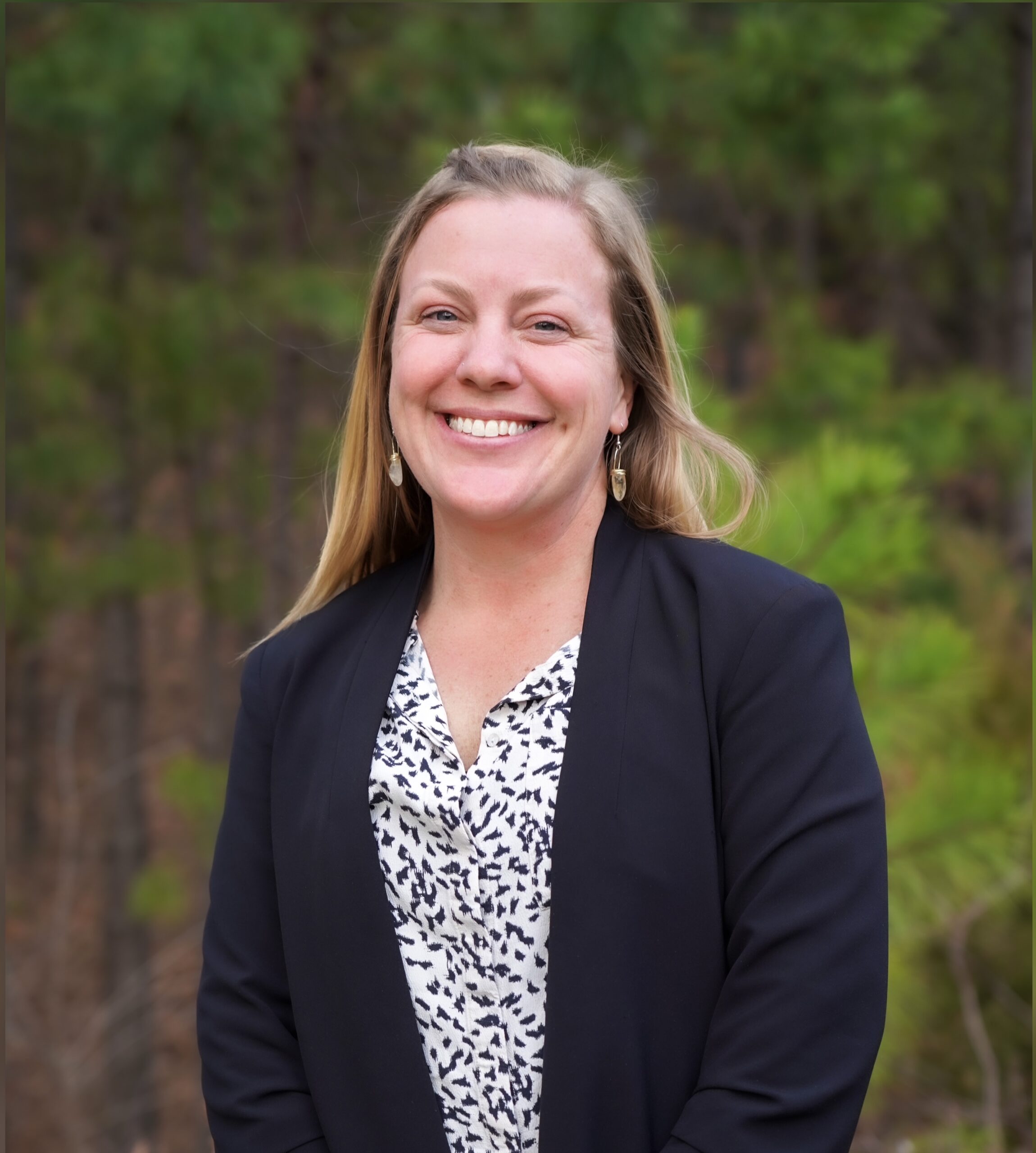 Meghan Post leads the utility’s education, outreach, and water conservation initiatives, including the Beaver Believers program. Through her work, she connects the community to its primary drinking water source, Beaver Lake, and helps residents understand how to protect the watershed that supplies it. Meghan specializes in turning complex drinking water and watershed science into engaging, hands-on learning experiences for students and community members. Her programs help people better understand where their water comes from and the role they play in protecting it.
One of her most impactful initiatives is Beaver Lake Volunteer Day, where residents participate in citizen science projects, shoreline cleanups, and educational activities that support long-term water quality monitoring and stewardship. Meghan also brings watershed education into classrooms and community spaces across the region, partnering with nonprofits and customer cities. Her leadership helps support sustainable source water protection for more than 400,000 people served by Beaver Water District.
Celebrate with Us this Summer!
Please join us in celebrating the Emerging Leaders in person at AWWA ACE in Washington DC! The WaterNow Emerging Leader Awards will be held at the Marriott Marquis hotel on June 22 at 4:30pm. Visit our Eventbrite page for more details and to register for your seat.
Want to strengthen your own leadership skills? An in-person workshop will be held the morning of June 25, and additional opportunities to participate virtually in the Emerging Leader Network will follow this summer and fall. Register here to join us! Please reach out to Emerson O'Donnell at eo@waternow.org with any questions!